

Is Drinking Alcohol a Sin?
What the Bible Actually Says About Wine, Strong Drink, and Drunkenness

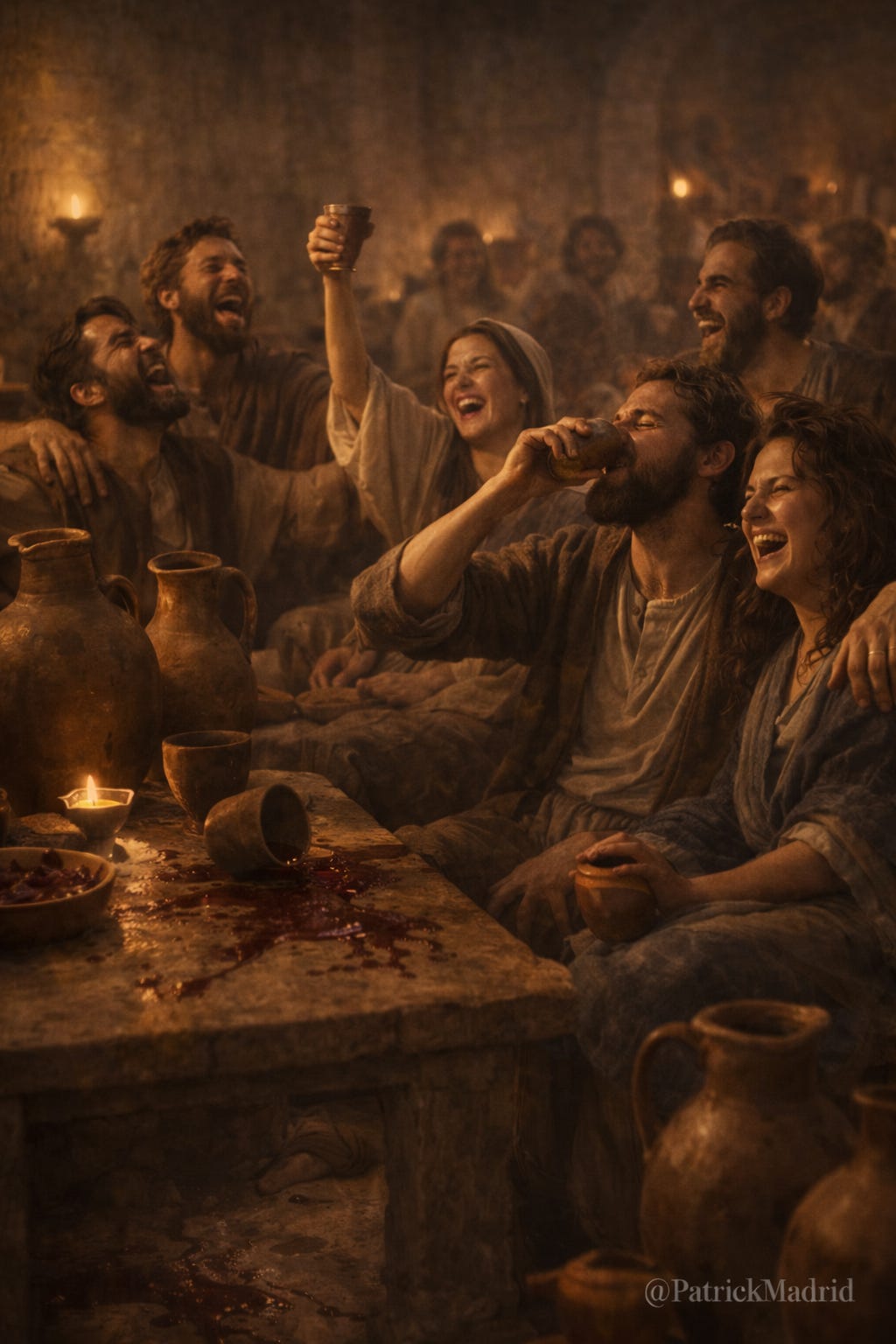
Deep Dive Podcast
Audio segment produced with AI narration summarizing Patrick Madrid’s written content.
MANY EVANGELICAL PROTESTANTS, including Baptists (particularly Southern Baptists), the Assemblies of God, and numerous other conservative groups, advocate total abstinence from wine and alcoholic beverages on biblical grounds. At their communion services, they typically use grape juice. Many claim that at the Last Supper, Jesus used unfermented grape juice rather than wine and that, in a more general context, the Bible proscribes drinking any alcoholic beverage.
Catholics disagree.
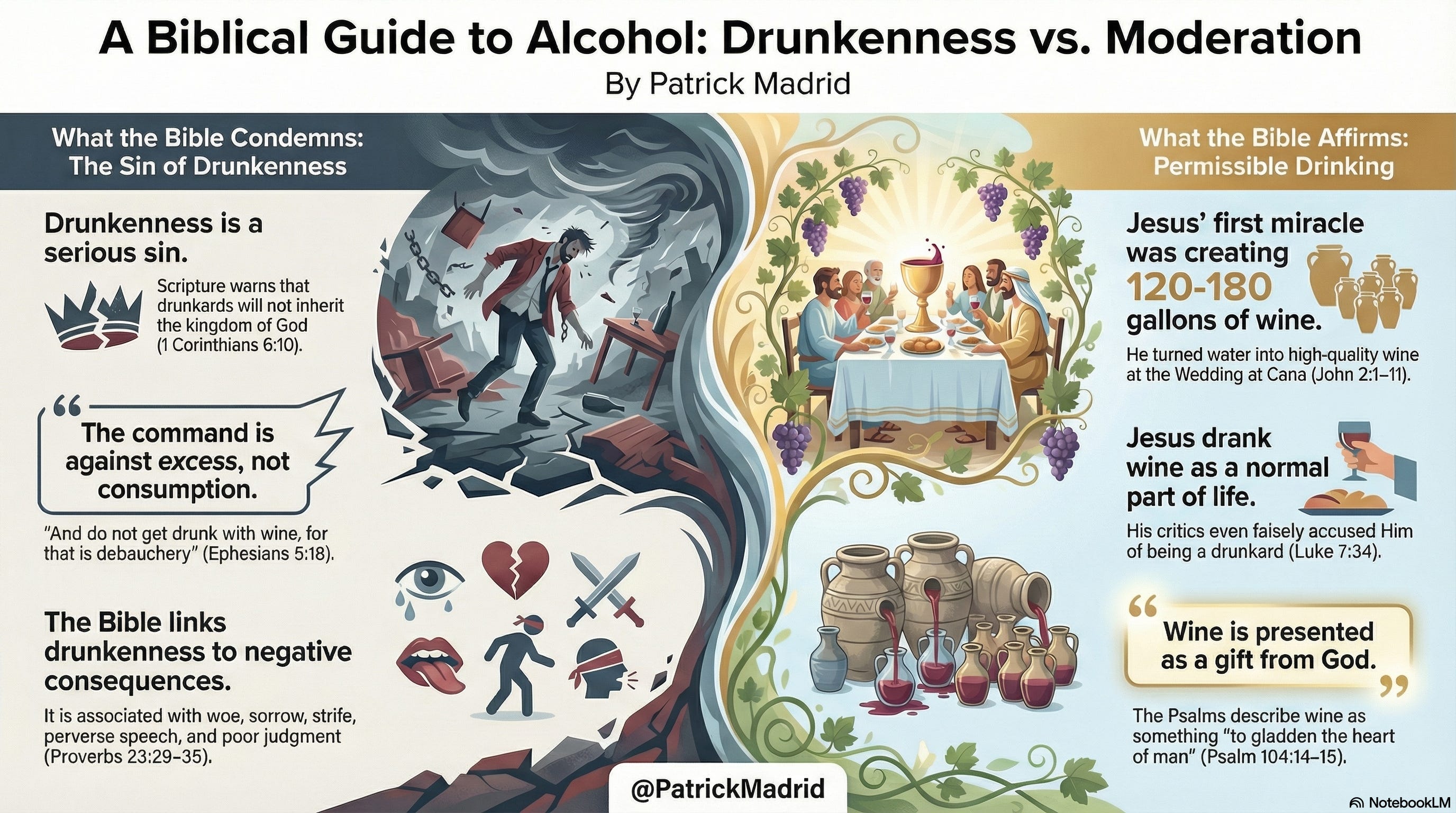
The Catholic Church is clear that drunkenness is a serious sin and must be avoided, while also affirming that drinking alcohol, in itself, is not sinful. Before demonstrating the Catholic position as found in the Bible, we will first take a sober look at the chief passages cited by the no-alcohol side of the debate and explain why they are wrong, even if for the right reason.
Biblical Warnings Against Drunkenness:
Genesis 9:20–21
“Noah began to be a man of the soil, and he planted a vineyard. He drank of the wine and became drunk and lay uncovered in his tent.”
Proverbs 20:1
“Wine is a mocker, strong drink a brawler, and whoever is led astray by it is not wise.”
Proverbs 23:29–35
“Who has woe? Who has sorrow? Who has strife? Who has complaining? Who has wounds without cause? Who has redness of eyes? Those who tarry long over wine; those who go to try mixed wine. Do not look at wine when it is red, when it sparkles in the cup and goes down smoothly. In the end it bites like a serpent and stings like an adder. Your eyes will see strange things, and your heart utter perverse things. You will be like one who lies down in the midst of the sea, like one who lies on the top of a mast. ‘They struck me,’ you will say, ‘but I was not hurt; they beat me, but I did not feel it. When shall I awake? I must have another drink.’”
Isaiah 5:11–12 ( 22)
“Woe to those who rise early in the morning, that they may run after strong drink, who tarry late into the evening as wine inflames them! Woe to those who are heroes at drinking wine, and valiant men in mixing strong drink.”
Isaiah 28:7
“These also reel with wine and stagger with strong drink; the priest and the prophet reel with strong drink, they are swallowed by wine, they stagger in judgment, they stumble in giving judgment.”
Habakkuk 2:15
“Woe to him who makes his neighbors drink—you pour out your wrath and make them drunk, in order to gaze at their nakedness!”
Luke 21:34
“But watch yourselves lest your hearts be weighed down with dissipation and drunkenness and cares of this life, and that day come upon you suddenly like a trap.”
Romans 13:13
“Let us walk properly as in the daytime, not in orgies and drunkenness, not in sexual immorality and sensuality, not in quarreling and jealousy.”
1 Corinthians 6:9–10
“Or do you not know that the unrighteous will not inherit the kingdom of God? Do not be deceived: neither the sexually immoral, nor idolaters, nor adulterers, nor men who practice homosexuality, nor thieves, nor the greedy, nor drunkards, nor revilers, nor swindlers will inherit the kingdom of God.”
Galatians 5:19–21
“Now the works of the flesh are evident: sexual immorality, impurity, sensuality, idolatry, sorcery, enmity, strife, jealousy, fits of anger, rivalries, dissensions, divisions, envy, drunkenness, orgies, and things like these. I warn you, as I warned you before, that those who do such things will not inherit the kingdom of God.”
Ephesians 5:18
“And do not get drunk with wine, for that is debauchery, but be filled with the Spirit.”
1 Peter 4:3
“For the time that is past suffices for doing what the Gentiles want to do, living in sensuality, passions, drunkenness, orgies, drinking parties, and lawless idolatry.”
As you read each of these passages closely, you’ll notice that while they clearly warns against the sin of drunkenness, none of them forbids or condemns drinking wine or other types of alcoholic beverages per se. In Ephesians 5:18, for example, St. Paul does not say, “Do not drink wine,” which would be a complete prohibition. Instead, he says not to drink wine to excess, which is quite a different thing.
The Catholic Church teaches, and common sense corroborates, that wine, like food, sex, laughter, and dancing, is a good thing when enjoyed in its proper time and context. To abuse any good thing is a sin, but the thing abused does not itself become sinful.
The Catechism of the Catholic Church:
The more one does what is good, the freer one becomes. There is no true freedom except in the service of what is good and just. The choice to disobey and do evil is an abuse of freedom and leads to “the slavery of sin.” (1733)
Temperance is the moral virtue that moderates the attraction of pleasures and provides balance in the use of created goods. It ensures the will’s mastery over instincts and keeps desires within the limits of what is honorable. The temperate person directs the sensitive appetites toward what is good, maintains a healthy discretion, and does not allow himself to be led astray by the passions of the heart. (1809)
Vices can be classified according to the virtues they oppose, or also be linked to the capital sins which Christian experience has distinguished, following Saint John Cassian and Saint Gregory the Great. They are called capital because they engender other sins, other vices. They are pride, avarice, envy, wrath, lust, gluttony, and sloth or acedia. (1866)
The virtue of temperance disposes us to avoid every kind of excess: the abuse of food, alcohol, tobacco, or medicine. Those incur grave guilt who, by drunkenness or a love of speed, endanger their own and others’ safety on the road, at sea, or in the air. (2290)
The Church is clear that drinking wine and other forms of alcohol to excess is a serious sin, but drinking alcohol in itself is not sinful. As St. Paul reminds us:
“Everything is lawful for me, but not everything is beneficial. Everything is lawful for me, but I will not let myself be dominated by anything” (1 Corinthians 6:12).
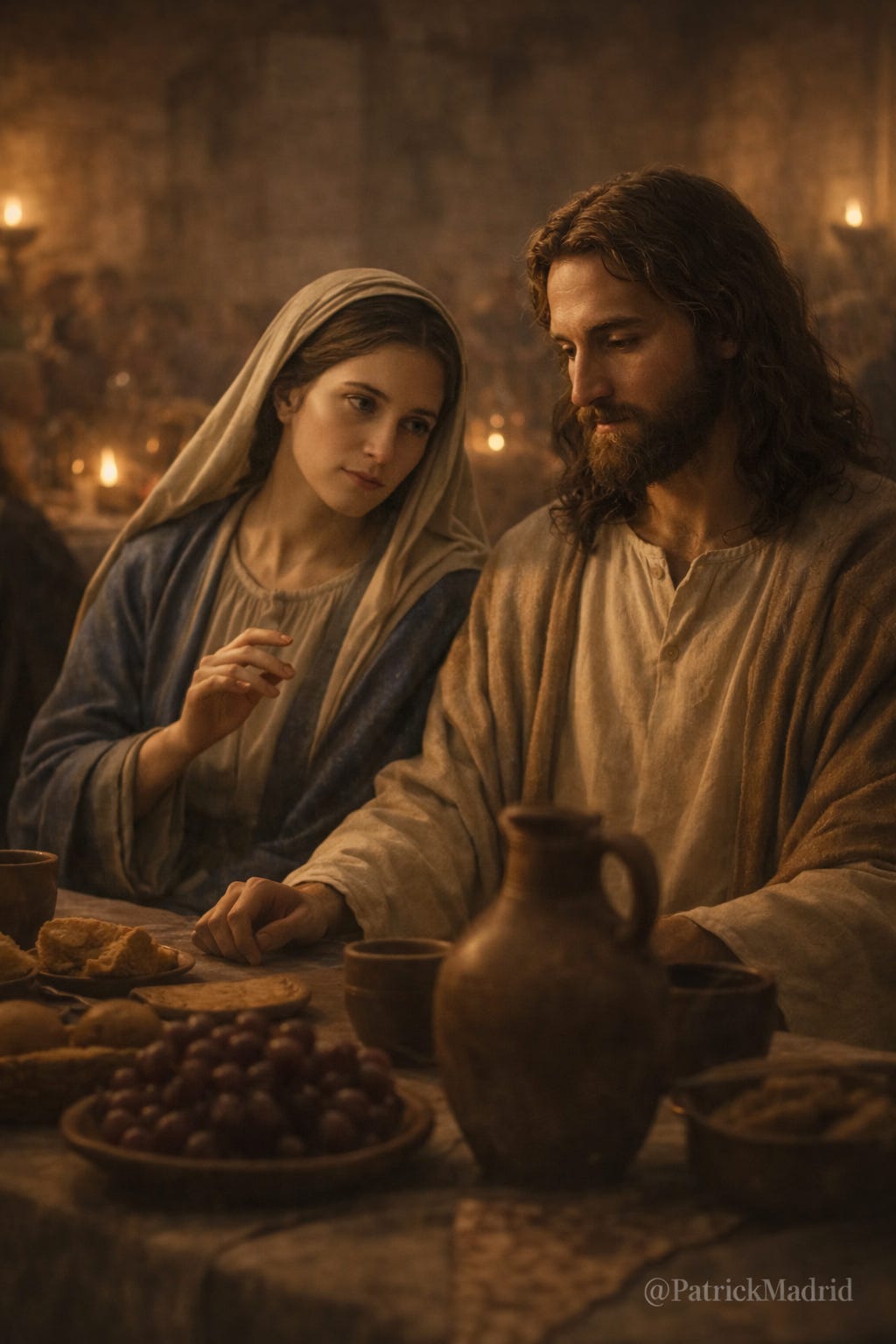
What Would Jesus Do? What Did Jesus Do?
In view of the Four Gospels, if Jesus had shunned wine and wanted His followers to do likewise, as many Protestants claim, why did He so frequently make use of wine in his parables and activities? Simple: He did not disapprove of wine drinking, so long as it conformed to the biblical guidelines of moderation.
The Bible tells us Jesus drank wine (Luke 7:34), often enough, apparently, that his detractors accused him of being a drunkard, and that his first recorded miracle was to turn water into wine (John 2:1–11).
Some who are opposed to drinking alcohol on biblical grounds say the kind of wine that was approved is the kind that does not intoxicate. But the Greek word for wine, οἶνος (oinos), used in the “do not get drunk on it” verses, is the same word used in the “it is okay to drink it in moderation” verses.
Oinos appears over 30 times in the New Testament, such as in John 2:1–11 (the Wedding at Cana, where Jesus turns water into wine of the highest quality), in Ephesians 5:18 (where St. Paul warns against getting drunk on wine), 1 Timothy 5:23 (where St. Paul encourages Timothy to drink some wine for the sake of his health), and in Matthew 9:17 (where Jesus speaks of “new wine” in “old wineskins”).
In Luke 7:34 (see also Matthew 11:19), referring to the accusation of drunkenness leveled against Him by His enemies, the Lord says, “The Son of man has come eating and drinking; and you say, ‘Behold, a glutton and a drunkard, a friend of tax collectors and sinners!’” The allegation of drunkenness was a slanderous falsehood, for Jesus never sinned (see Hebrews 4:15 and 1 Peter 2:22), but it was accurate that Jesus was known to drink wine, which was a staple of the dinners He and His disciples were occasionally invited to attend (see Matthew 9:10–13, Mark 2:15-17, and Luke 5:29-32).
“Why do you eat and drink with tax collectors and sinners?” his critics asked. Jesus answered them, “Those who are well have no need of a physician, but those who are sick. I have not come to call the righteous but sinners to repentance.”
Look also at 1 Corinthians 11:20–21:
“When you meet in one place, then, it is not for eating the Lord’s Supper, for in eating, each one goes ahead with his own supper, and one goes hungry while another gets drunk.”
Note that all true wine has alcohol and can intoxicate (i.e., get you drunk if consumed in sufficient quantity), but “wine” without alcohol is not wine at all, but grape juice. Since grape juice has no intoxicating effects, what does Paul refer to here? How can one get drunk on grape juice?
The Bible also speaks of the goodness of wine when used correctly:
Deuteronomy 14:23-26
“You shall eat in the presence of the Lord your God, in the place which he will choose, to make his name dwell there, the tithe of your grain, of your wine, and of your oil, and the firstlings of your herd and flock; that you may learn to fear the Lord your God always.
“And if the way is too long for you, so that you are not able to carry the tithe, when the Lord your God blesses you, because the place is too far from you, which the Lord your God chooses, to set his name there, then you shall turn it into money, and bind up the money in your hand, and go to the place which the Lord your God chooses, and spend the money for whatever you desire, oxen or sheep, wine or strong drink, whatever your appetite craves; and you shall eat there before the Lord your God and make merry, you and your household.
Psalm 104:14–15
Thou dost cause the grass to grow for the cattle,
and plants for man to cultivate,
that he may bring forth food from the earth,and wine to gladden the heart of man,
oil to make his face shine,
and bread to strengthen man’s heart.
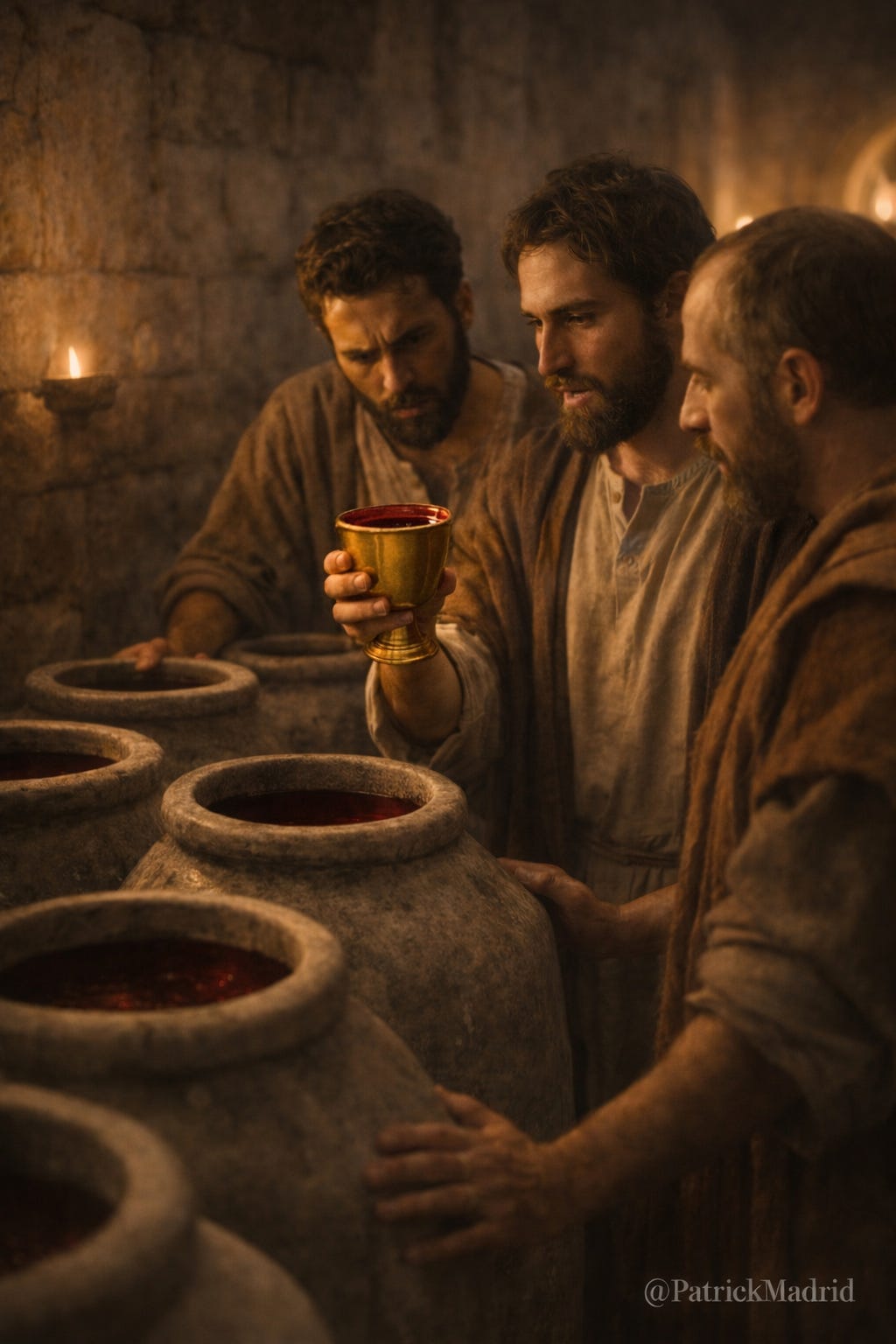
In conclusion, return to the account of Jesus performing His first public miracle by making a lot of wine at the Wedding at Cana:
John 2:6
“Now six stone jars were standing there, for the Jewish rites of purification, each holding twenty or thirty gallons.”
The figure of “twenty or thirty gallons” per jar corresponds to the Greek phrase “two or three metretas” (μετρητής), an ancient Greek liquid measure roughly equivalent to 9–10 U.S. gallons per metrētēs.
Thus, each stone jar held approximately 18–30 gallons, translated as “twenty or thirty gallons.” Which means that each of the six stone jars could contain between 20–30 gallons of wine (when filled to the brim as instructed in John 2:7). Which in turn means that the Lord miraculously created between 120 to 180 gallons of wine.
One might legitimately wonder why, if Jesus had merely turned water into grape juice, John goes out of his way to quote the headwaiter’s astonished remarks:
“Everyone serves good wine first, and then, when people have drunk freely, an inferior one.”
No matter how freely one drinks grape juice, it will not impair one’s ability to discern between good and inferior grades.
P.S. If you or someone you know is struggling with alcoholism or alcohol addiction, check out CatholicInRecovery.com and HopeReborn.org.
Copyright © 1988-2026 Patrick Madrid. All rights reserved. All text, images, and other original content are the property of the author. Revised and expanded adaptation of my article “The Wrath of Grapes.”
I hope you enjoy my articles here. If so, please tap the Share button above to post any of them on X or Instagram or to send it to someone who might be interested in it. And if you enjoy thoughtful, friendly, faith related content, you’ll appreciate my daily program on Relevant Radio. Listen here or get the free Relevant Radio app.

Thank you for this excellent dive into one of my personal "peeves"(I think that's the correct word), I don't think I had read all those passages, and I have a more clear understanding of why what is said by the protestants is not accurate.
Nicely done!
Here it is in The Odyssey:
https://andrewsawyer.substack.com/p/the-way-home-part-3-the-cicones-and