

The Jerk
How Youthful Sarcasm Turned Me Into Someone I Never Meant to Be

Deep Dive Podcast
Audio segment produced with AI narration summarizing Patrick Madrid’s written content.
I DID NOT set out to become a jerk. But my early attempts to use sarcasm as humor got me there faster than I ever expected.
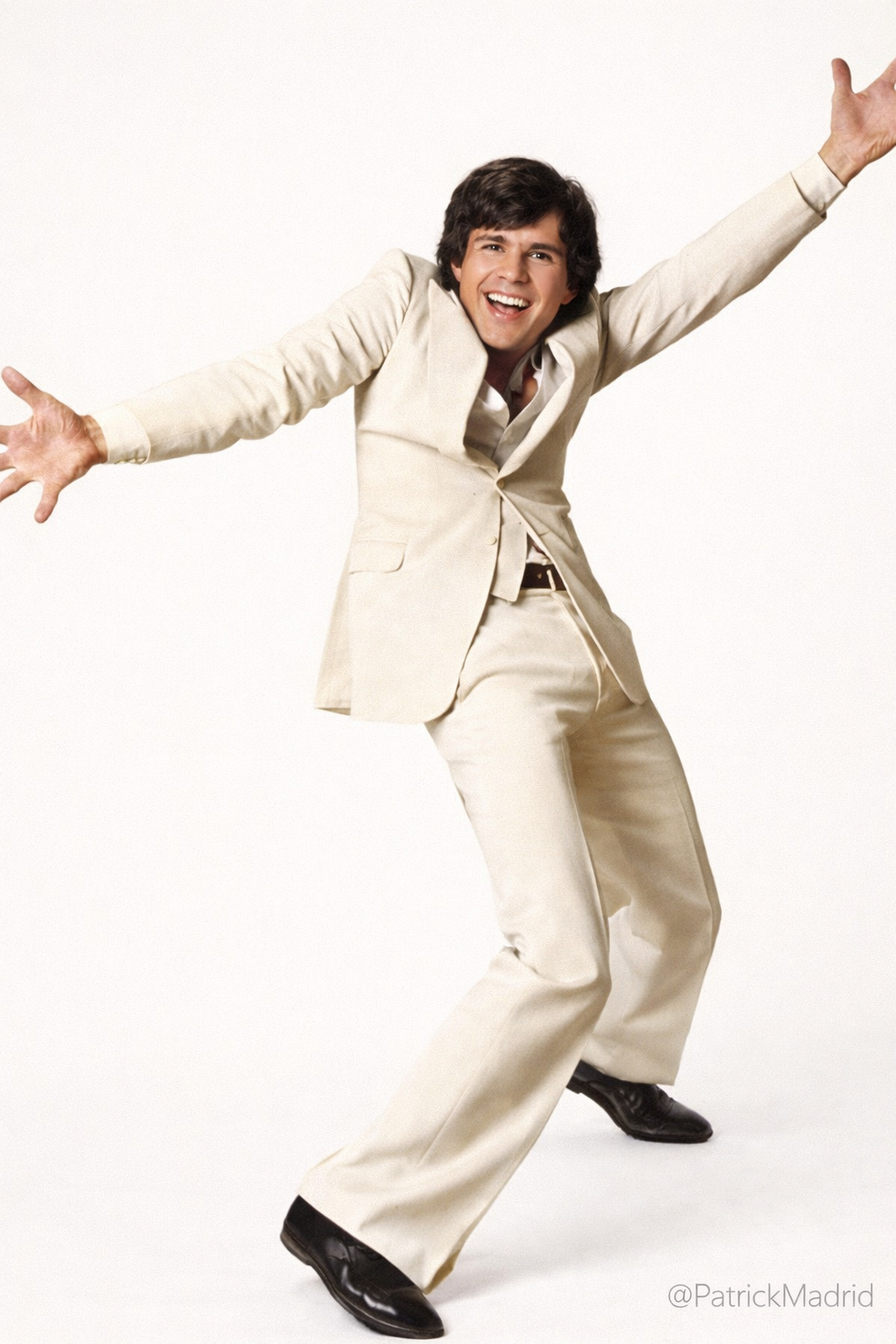
An instant fan of Steve Martin from the day his newly released 1977 comedy album, Let’s Get Small, first played through my speakers, I listened to it endlessly. Before long, every line of that strange, brilliant routine was committed to memory, right down to his sardonic cackle and his trademark, “Well, excuuuuuse me!” That phrase was very much “in” back then.
I loved his absurdist humor, especially his exaggerated sarcasm. It sounded fearless. It sounded smart. It sounded funny. Naturally, I decided to make it my own.
Here’s the catch: When Steve Martin was sarcastic, people laughed. When I was sarcastic, people winced.
I couldn’t pull it off the way my comedy hero did. Worse still, I had no idea I was failing. And that is how I slowly, unintentionally, became a jerk.
What I didn’t understand then, when I was eighteen, was that Steve Martin’s success didn’t happen overnight. His comedy had been honed over years of trial-and-error stand-up routines before live audiences, learning what worked and what didn’t. He’d worked relentlessly to master the fine, and usually non-transferable, art of timing and nuance that made him so successful.
I hadn’t done any of that. I was just imitating, in my own clumsy way, the effortless skill with which he used sarcasm as humor. It worked for him. Big time. When I tried to copy him, it failed outright.
When a Joke Lands Like a Punch
Looking back, a number of uncomfortable memories surface from that season of my life. Each one carries the same lesson. Words spoken carelessly have weight, even when the speaker thinks he is being clever.
One incident happened during my freshman year of high school, even before Steve Martin entered my life. I made a sarcastic remark about a fat kid in my class. I did not know he had overheard me. While I was changing clothes in the locker room, he walked over, said nothing, and punched me square in the face as hard as he could.
I went down instantly.
The blow flattened me physically, but the deeper damage was to my pride. I learned something that day, though it took years for the lesson to sink in. Humor that humiliates is not humor at all.
A Line I Wish I Could Take Back
Another memory still makes me wince.
When I was eighteen, I attended a Youth Encounter Retreat. At the end of the weekend, we were brought into a large hall where our family and friends waited to surprise us. Each retreatant was invited to give a brief reflection on the weekend and thank his or her “Kris Kringle.” At the beginning of the retreat, everyone had drawn a name and anonymously performed small acts of kindness for that person, including writing a heartfelt note of encouragement.
My Kris Kringle turned out to be a sweet girl a few years younger than me.
When it was my turn to speak, I slipped fully into Steve Martin mode. Smirking, I chortled, “Wow! I’m sure glad I didn’t get someone ugly!”
The moment the words left my mouth, regret followed.
There were no laughs. Instead, there were groans. Several people gasped. I saw furrowed brows, heads shaking, and faces registering disbelief. The unspoken verdict hung in the air: What a jerk.
I sat down quickly, embarrassed and angry with myself for misjudging the room yet again. I had wanted to be funny and likable. Instead, I had publicly humiliated myself and cheapened a moment that deserved reverence.
That line still echoes in my memory, not because it was clever, but because it was careless, insulting, and no doubt deeply hurtful. How I regret having said it!
When Sarcasm Costs Someone Her Job
The pattern followed me into the workplace.
At one retail job, I believed I was being witty with sarcastic comments that slowly alienated my coworkers. In one case, the damage was serious. One woman quit rather than continue working with me.
During a routine financial audit, a cashier, a woman in her thirties, wondered aloud whether the auditors might want to question the cashiers. She did not seem worried. I had no reason to doubt her honesty.
But I could not resist.
“If you’re honest and not stealing from the till,” I said, flashing a theatrical wink, “then you’ve got nothing to worry about.”
She stared at me. The look was sharp, wounded, and final.
Later that afternoon, I asked the manager, “Hey, where’s Susan?”
He sighed. “She quit.”
“Quit?” I asked.
“She didn’t give a reason,” he said, clearly irritated. “She just walked out.”
I nodded and said nothing. I knew exactly why. That knowledge sat heavily with me, though not heavily enough to change me right away.
Learning to Choose My Words
There were other moments like these. I am grateful that time has blurred many of them. The specifics matter less now than the pattern they reveal.
I mistook sarcasm for humor. I mistook cleverness for kindness. I mistook laughter for approval.
Along the way, I embarrassed people, hurt feelings, and damaged relationships. In the end, it all traced back to a single failure. I did not control my tongue.
Once it finally dawned on me that my comedic efforts were not producing comedy gold, the lesson came hard and fast. What I had been treating as humor was actually working against me. I was not merely failing to be funny. I was alienating people, cheapening conversations, and steadily undermining my own credibility.
That realization stung. But it also brought clarity. I began shedding that affectation deliberately, and not a moment too soon. The cost of keeping it had become unmistakable, and I was ashamed of how long it had taken me to see what should have been obvious.
By God’s grace, and with the help of friends who cared enough to correct me when I deserved it, I eventually outgrew that habit. I learned that wit without charity wounds, and humor without humility corrodes.
I stopped trying to be a “wild and crazy guy.” I learned something better instead.

What I Learned About Words
Scripture has far more to say about speech than any comedian ever could. These passages no longer read like general wisdom. They read like lived experience.
“He who keeps his mouth and his tongue keeps himself out of trouble” (Proverbs 21:23).
“Set a guard, O Lord, over my mouth; keep watch over the door of my lips!” (Psalm 141:3).
“For we all make many mistakes, and if any one makes no mistakes in what he says he is a perfect man, able to bridle the whole body also. If we put bits into the mouths of horses that they may obey us, we guide their whole bodies. Look at the ships also; though they are so great and are driven by strong winds, they are guided by a very small rudder wherever the will of the pilot directs. So the tongue is a little member and boasts of great things. How great a forest is set ablaze by a small fire! And the tongue is a fire… From the same mouth come blessing and cursing. My brethren, this ought not to be so” (James 3:2–10).
Steve Martin’s 1979 film The Jerk still makes me laugh. But its title carries a personal reminder now. Some roles are best left to professionals.
Learning when to speak, and when not to, has made me a better man, a better husband, a better father, and a better communicator. It took time. It took humility. And it took more than a few hard lessons delivered the long way around.
Copyright © 2025 Patrick Madrid. All rights reserved. All text, images, and other original content are the property of the author.
I hope you enjoy my articles here. If so, please tap the Share button above to post any of them on X or Instagram or to send it to someone who might be interested in it. And if you enjoy thoughtful, friendly, faith related content, you’ll appreciate my daily program on Relevant Radio. Listen here or get the free Relevant Radio app.

It is a good reminder, “engage brain before mouth….”I also have learned this the hard way.
I recent heard this, maybe Chesterton "A wise man said....nothing"